
Carriage Bolts
Showing all 6 resultsSorted by popularity
-
 Price range: £6.98 through £16.73 Inc Vat. Select options This product has multiple variants. The options may be chosen on the product page
 -
Price range: £10.02 through £17.82 Inc Vat. Select options This product has multiple variants. The options may be chosen on the product page
-
Price range: £7.43 through £20.69 Inc Vat. Select options This product has multiple variants. The options may be chosen on the product page
-
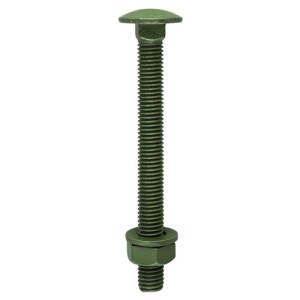 Price range: £6.58 through £17.80 Inc Vat. Select options This product has multiple variants. The options may be chosen on the product page
 -
Price range: £7.88 through £20.29 Inc Vat. Select options This product has multiple variants. The options may be chosen on the product page
-
Price range: £8.57 through £756.00 Inc Vat. Select options This product has multiple variants. The options may be chosen on the product page
Showing all 6 resultsSorted by popularity
Carriage Bolts
When you need a strong, secure fastening with a clean, finished appearance, carriage bolts are a dependable choice for the trade. Designed with a smooth, domed head and square neck beneath, they provide a neat look while preventing rotation during installation.
Carriage bolts are commonly used for timber-to-timber and timber-to-metal applications, making them ideal for fencing, decking, garden structures, gates, play equipment and general construction projects. The square section under the head grips into timber as the nut is tightened, allowing for easy installation from one side without the bolt spinning.
These bolts are widely used by builders, landscapers and joiners where both strength and presentation matter. The domed head gives a tidy, low-profile finish, making carriage bolts suitable for visible applications where appearance is important.
Available in a range of sizes and finishes, carriage bolts can be matched to suit internal or external use, depending on the specification. Choosing the correct size and corrosion resistance ensures a secure, long-lasting fixing in demanding environments.
For strong, reliable connections with a clean finish, carriage bolts are a practical and versatile fastening solution. Keep the right sizes in stock and tackle structural timber jobs with confidence.
FAQs
1. What are carriage bolts used for?
They’re commonly used for timber-to-timber and timber-to-metal fixings in fencing, decking and structural timber projects.
2. Why do carriage bolts have a square neck?
The square neck grips into timber to prevent the bolt from turning while the nut is tightened.
3. Are carriage bolts suitable for outdoor use?
Yes, when chosen with the appropriate corrosion-resistant finish, they’re suitable for external applications.
4. Do carriage bolts require washers?
Washers are often recommended to help distribute load and protect the surface material.
5. How do I choose the correct carriage bolt size?
Consider the thickness of the materials being joined, the required diameter for strength and the environmental conditions.