
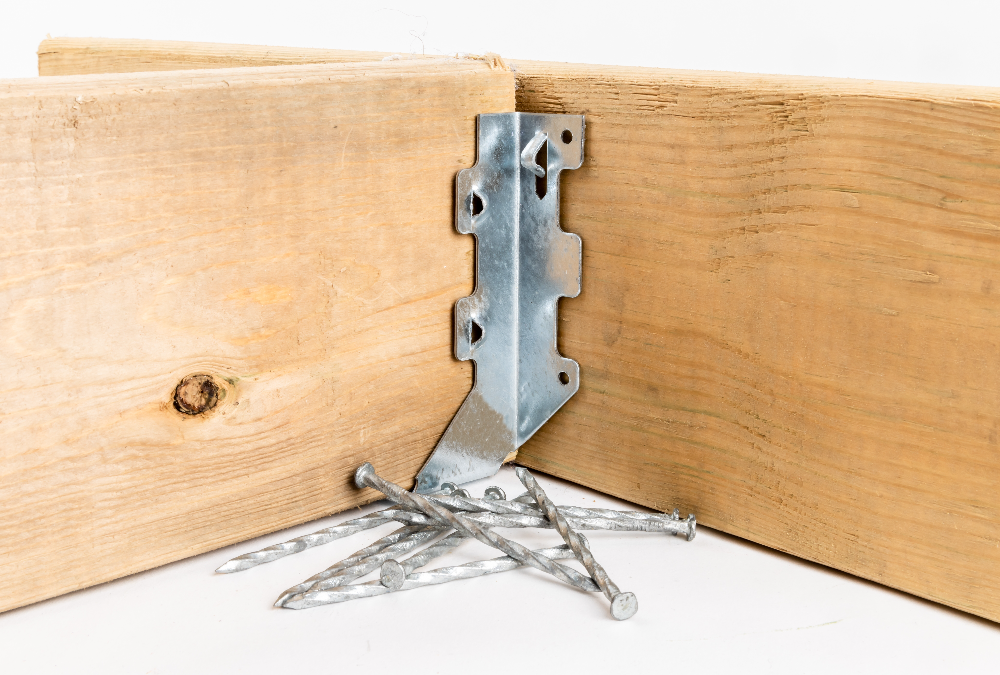
If you’re working on a timber project, whether it’s a deck, floor system, ceiling, or extension, creating strong and stable connections is essential. Even the best-quality timber can fail if the fixings are weak or unsuitable. Joist hangers are designed to prevent this by supporting joists securely and transferring loads safely into beams, ledgers, or masonry. When installed correctly, they keep your structure strong, level, and reliable for many years.
At RC Screws, we’ve spent years helping builders, tradespeople, and DIYers choose the right fasteners and fixings for their projects. And we know just how important choosing the correct joist hanger is for the strength and safety of your build. In this guide, we’ll explain what joist hangers do, the different types available, and how to pick the right one for your next job.
What joist hangers actually do
Think of a joist hanger as a metal cradle that holds your joist in the exact position you want it. Instead of relying on toenailing or notching the timber, the hanger takes the weight, keeps the joist level, and transfers the load safely into the supporting beam or wall.
There are a few different types you’ll come across. The most common is the face-fix hanger, which simply screws or nails onto the face of a beam or ledger board. For builds where your joists connect into a brick or block wall, you’ll need a masonry hanger. And if your joists sit at an angle or your layout isn’t standard, there are skewed or adjustable hangers that help everything line up properly. No matter the style, the idea is the same: keep your joists held firmly in place.
Choosing the right strength and material
Not every project needs the heaviest and strongest hanger, but you do need to match the hanger to the job. If you’re working on something small and non-structural, a light-duty hanger may be fine. But for floors, decks, roofs, extensions, or anything carrying real weight, a heavy-duty hanger is the safest choice.
Most joist hangers are made from galvanised steel, which is perfect for indoor jobs or sheltered areas. If your project is outdoors or anywhere that will get damp, stainless steel is a far better option because it won’t rust. At RC Screws, we stock a wide selection of both, so whether you’re building a deck or fixing internal joists, you’ll find a hanger that suits the job properly.
What to think about before you buy
The first thing you need to check is the size of your timber. Joist hangers are designed to fit snugly, so you want a hanger that matches the width and depth of your joist. If it’s too big or too small, you won’t get the support you need.
Next, think about what you’re fixing into. Timber-to-timber and timber-to-masonry hangers are very different, so choosing the right one is important. It’s also worth thinking about the environment your hangers will be in. Indoors? Galvanised is fine. Outdoors or exposed to moisture? Stainless steel is the way to go.
And of course, always check the load rating. This tells you how much weight the hanger can safely carry and makes sure your structure stays strong over time.
Installing joist hangers the right way
Even the best hanger won’t do its job if it’s fitted incorrectly. The joist needs to sit right down into the seat of the hanger so it’s fully supported. Every fixing hole in the hanger should be used, and the screws or nails should be the correct type of structural fixings, not general-purpose ones.
Try not to bend or reshape the hanger, as this can weaken it. If you’re working with masonry hangers, make sure they’re properly built into or anchored to the wall. Taking a bit of extra care during installation makes a huge difference to the strength and lifespan of your structure.
Why quality matters when it comes to fasteners and fixings
It’s easy to overlook fixings when you’re planning a project, but they’re the parts that hold everything together. A reliable joist hanger gives you peace of mind that your structure is safe, secure, and built to last. Using a poor-quality hanger might not cause an issue right away, but over time, you’ll feel the effects through movement, sagging, or even structural failure, which is what no one wants.
At RC Screws, we make sure the hangers we stock are up to the standard you need on site. Whether you’re fitting new floor joists, building a deck, or tying into masonry, you’ll find a hanger you can trust to do the job properly.
If you’re deciding between different joist hangers and want a bit of guidance, our friendly team at RC Screws is happy to help. You can just give us a call on 01254 917744 and we’ll help you choose the right hanger for your project.