
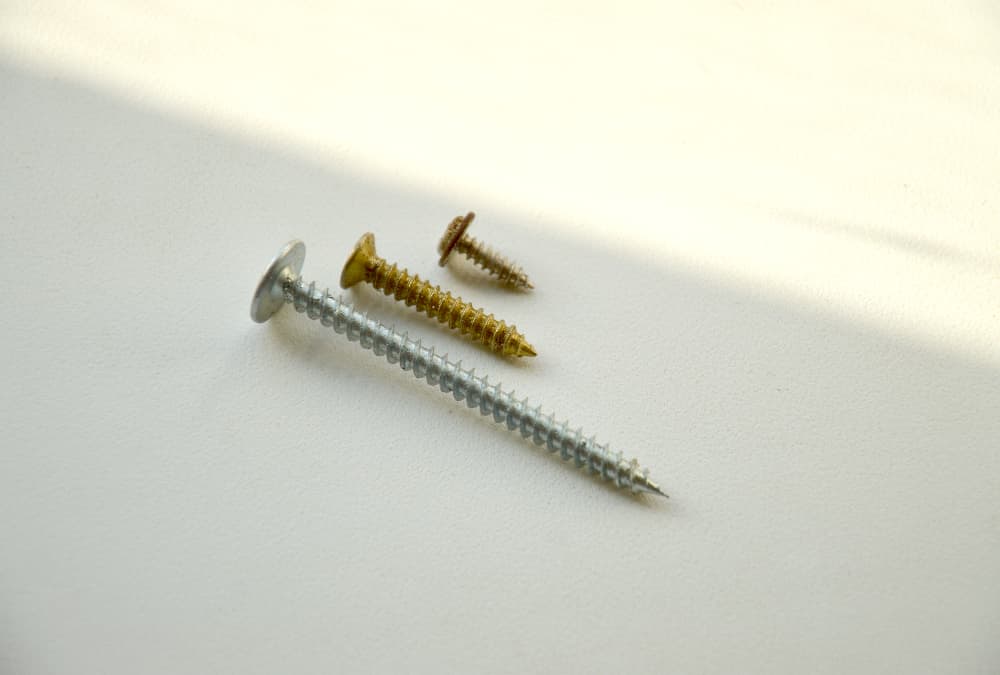
Whether you’re putting up shelves, fitting new floorboards or building a deck in the garden, choosing the right screws is an important part of getting the job done properly. The size of your fixings can affect how securely materials hold together, how neat the finished result looks and how smoothly the installation goes.
With so many sizes and styles available, though, it isn’t always obvious which screws you need. A fixing that’s suitable for one job might be completely wrong for another, so it’s worth understanding a few basics before placing your order.
At RC Screws, we supply a wide range of fasteners and fixings for both professional tradespeople and DIY enthusiasts, including a variety of screws from trusted manufacturers like TIMCO, SENCO and more. As an independent, family-run business, we’re committed to providing premium products, great value and helpful advice to customers across the UK.
With that in mind, let’s break down what you need to consider when deciding what size screws to use in your next project.
Understanding screw measurements
When comparing screw sizes, you’ll generally come across two key measurements: length and diameter. If you’re an experienced tradesperson, this will probably be familiar territory, but if you’re newer to DIY or simply need a quick refresher, it’s worth getting to grips with the basics.
Take a screw labelled 4.5 x 60mm, for example. The first number tells you how wide the screw is, while the second tells you how long it is. Both are important when choosing a fixing, as you’ll need a screw that’s suitable for the materials you’re working with and the job you’re trying to get done.
It’s worth remembering that a longer or thicker screw isn’t always the better choice. If it’s too long, it could come through the other side of the material, while a screw that’s too thick for the timber could increase the risk of splitting. Choosing suitable dimensions for the materials you’re working with helps you achieve a secure fixing without causing unnecessary damage.
You’ll also notice that screws come in different shapes and designs. Some have heads that sit flush with the surface, while others sit proud, and different thread designs and finishes make certain screws better suited to specific jobs. Keeping these differences in mind will help you choose a fixing that works well for your materials and gives you the finish you’re looking for.
Getting an accurate measurement
If you’ve got an existing screw that needs replacing, measuring it can help you narrow down your options. So, how do you measure screw size without making a mistake?
Start with the length. For most countersunk screws, which are designed to sit flush with the material’s surface, measure from the tip to the top of the head. For screws with a head that sits above the surface, like many pan-head designs, measure from the tip to the underside of the head instead.
Next, check the diameter across the threaded section. A calliper is useful for this, as it can provide a more accurate reading than a standard ruler, particularly with smaller fixings. Make sure you’re measuring the screw itself rather than the width of its head. Where possible, check the original packaging or product specifications, too, as these may tell you the exact size and type of fixing used.
Matching the measurements alone doesn’t guarantee a suitable replacement. You’ll also need to consider the screw’s head, thread and material, along with the application it was designed for. This is particularly important when replacing specialist or structural fixings.
Choosing the right screw length
When you’re picking a screw, it’s always a good idea to start by thinking about the thickness of the materials you’re joining. Remember, the screw needs to be long enough to pass through the first piece of material and go far enough into the second to hold the two together securely. It should also be short enough to avoid coming through the other side or damaging anything behind it.
For example, if you’re wondering what size screws to choose for deck boards, consider the thickness of the boards and how far the screws need to extend into the supporting joists. The Timber Decking and Cladding Association recommends using a screw length of at least 2.5 times the board thickness. For a 20mm board, that’s 50mm; for a 25mm board, it’s 62.5mm, so a suitable 65mm screw may be an option. These are general guidelines, so check the screw manufacturer’s recommendations and make sure the fixing is suitable for your job.
Choosing the right screw diameter
As we touched on earlier, a thicker screw isn’t automatically better – instead, the right diameter depends on the materials you’re joining, the type of fixing and what the connection needs to withstand.
The thinner the material, the more care you need when choosing your screw diameter. As we touched on earlier, a screw that’s too thick can split a narrow strip of timber or break through the edge of a board, so a slimmer screw is often a better choice. Thicker timber may accommodate a wider screw, but the right size also depends on how the pieces are being joined and how much load the fixing needs to support. For example, lighter joinery may suit a general-purpose wood screw, while joining load-bearing timber may require a structural timber screw. The right diameter depends on the specific screw and connection, so check the product specifications before choosing a size.
The material itself matters too. Hardwoods are often denser than softwoods, so drilling a pilot hole can make driving the screw easier and help reduce the risk of splitting. MDF and chipboard can lose their grip around a fixing if the screw is too close to the edge, so follow the screw manufacturer’s guidance on suitable sizes and positioning. There’s no single diameter that works for every material and application, so it’s important to choose a screw designed for the job.
Deciding between screw heads, threads and finishes
Once you’ve chosen the length and diameter of the screws, it’s also important to think about other factors like the head, thread and finish. These all affect how the screw sits, how well it grips and how it stands up to the conditions it’ll be used in.
- Screw head – choose a shape that suits the material and application. Countersunk heads are designed to sit flush with the surface, making them a good choice for a neat finish. In comparison, pan heads sit proud of the surface, which can work well when a flush finish isn’t needed (for example, when fixing metal brackets). Wafer heads have a wide, low-profile head that spreads the bearing force over a larger area, making them useful for some metal framing and construction fixings.
- Thread – the thread helps the screw grip, so it needs to suit what you’re fixing into. Coarse-thread drywall screws are commonly used with timber studs, while fine-thread versions are designed for compatible metal framing. For other jobs, choose a screw designed for your material rather than assuming one thread type will work everywhere.
- Finish – think about where the screw will be used and how much exposure to moisture it will face. Zinc-plated screws are often suitable for dry indoor use, while outdoor fixings need suitable corrosion protection. Exterior-coated screws offer varying levels of protection, so check their stated rating before using.
So, if you’ve been wondering ‘how do you measure screw size?’ or looking for a refresher on choosing the right fasteners and fixings, we’ve hopefully given you a clearer idea of what to look for – and if you’re ready to order, we’re here to help. At RC Screws, we stock a wide range of screw sizes and types for all kinds of applications, and our team is always on hand to help you find exactly what you need. Give us a call on 01254 917744, or visit our Blackburn trade counter today, and we’ll help you get started.